
Spray Foam Roofing Services in Victoria, TX
This roofing option helps property owners in Victoria, TX improve roof insulation, address air leakage, and create a continuous protective assembly. The system uses spray polyurethane foam (SPF) beneath a compatible protective roof coating. A professional assessment helps determine whether the existing roof is suitable, what preparation may be needed, and which materials are appropriate for the building's condition and local weather exposure. Proper installation can support energy efficiency while providing a seamless layer across compatible roof surfaces.
Get Your Free Estimate
We will get back to you as soon as possible.
Please try again later.
24/7 service available
Spray Foam Roofing in Victoria, TX
Victoria's heat, humidity, and seasonal heavy rainfall can place ongoing demands on roofing systems. Polyurethane foam roofing may be suitable for certain flat and low-slope roofs because closed-cell foam expands into a continuous layer that helps limit air leakage and unwanted heat transfer. When properly installed and protected with a compatible coating system, an SPF roof can help reduce water intrusion and improve thermal performance. Suitability depends on the roof's design, condition, drainage, and the products selected for the assembly. Although the finished system can provide a water-resistant surface, it should not be assumed to be completely waterproof under every condition.
Every project should begin with a professional roofing assessment. A qualified contractor should examine the existing roof surface, drainage, moisture conditions, flashing details, and structural components before recommending an application. This evaluation helps identify active leaks, deteriorated materials, ponding water, or other problems that may need attention before installation. Addressing these conditions first is important for the performance of the completed system, whether the project involves a residential roof or a commercial roof.
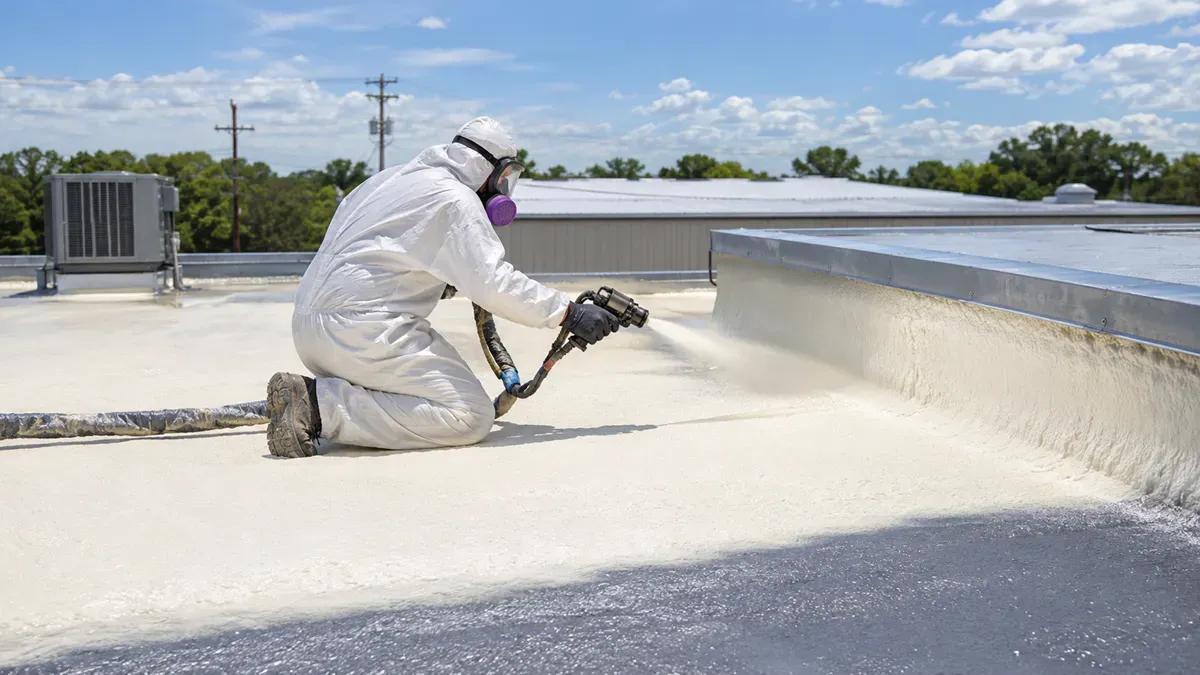
Read the building before treating it
Roofing Insulation Challenges
Spray foam insulation can help reduce unwanted heat transfer, but successful roofing work involves more than applying foam to a surface. Victoria's humid conditions make moisture management particularly important. Applying foam over wet materials or failing to address existing leaks can leave moisture-related problems unresolved and may contribute to deterioration or mold growth. The roof assembly should be evaluated before work begins. The density of the foam and its R-value per inch also affect the insulation performance, so the product and application thickness must suit the roofing design.
A suitable installation starts with a roof substrate assessment and drainage evaluation. The surface should be checked for deterioration, trapped moisture, loose materials, and areas where water collects. Drainage conditions matter because persistent ponding can affect the roofing assembly and its protective coating. Existing systems, including some built-up or tar and gravel roofs, may require additional evaluation to determine whether the surface is compatible with a new application. Any necessary repairs or preparation should be identified before the insulation is installed.
The installer should also follow the product manufacturer's requirements for application conditions, coverage, and thickness. Consistent application helps create an even insulation layer, while gaps or thin areas may reduce system performance. Professional-grade equipment and appropriate job-site procedures help control the application, but the finished result also depends on substrate condition, product compatibility, and workmanship. A roof vent, penetrations, edges, and flashing transitions should be considered as part of the complete assembly rather than treated as isolated details.
From first look to final check
Spray Foam Roofing Installation Process
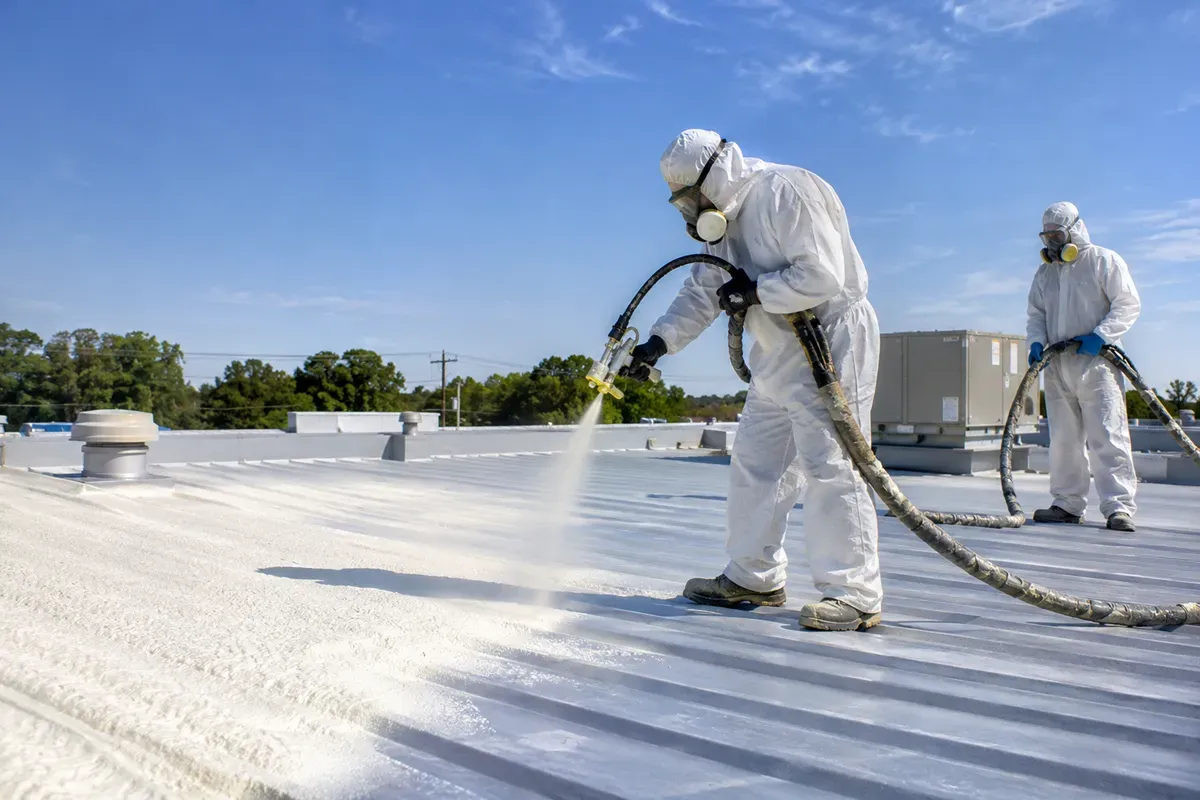
A successful installation begins with thorough roof surface preparation. The existing substrate should be inspected and cleaned, and unsuitable materials, loose coatings, or damaged areas may need to be addressed. The roof must meet the selected product's requirements for dryness, temperature, and surface condition before application. Once preparation is complete, the installer uses specialized equipment to apply a two-component spray polyurethane foam mixture.
Step / 01
Closed-Cell Spray Foam Installation
This closed-cell material expands and forms an insulated layer across compatible roof areas. The installation of spray foam requires controlled application to achieve the specified thickness and even coverage.
Step / 02
Protective Roof Coating Application
After the foam has cured according to the manufacturer's requirements, a compatible roof coating system is applied to shield it from ultraviolet exposure and weathering. Depending on the roof and product specifications, the coating may be an elastomeric or silicone formulation. The coating application, including the required top coat thickness, should follow the manufacturer's instructions. Some systems may use roofing granules or a granule-surfaced finish for additional surface protection.
Step / 03
Curing, Inspection, and Ongoing Maintenance
Curing and re-entry periods vary by product and site conditions, so the manufacturer's instructions should determine when the roof can be accessed. Periodic inspections and maintenance, including recoating when required, help preserve the installation over time.
Understand the scope before the work begins.
A project-specific assessment is the most reliable way to understand material needs, preparation, and installation requirements.
Project planning
Spray Foam Roofing Installation Costs
Installation costs depend on the roof's size, layout, existing condition, foam thickness, coating specifications, and accessibility. Estimates may be calculated per square foot, but the final amount depends on the full scope of work rather than roof area alone. Larger or more complex roofs may require additional labor and equipment time. The amount of surface preparation, repairs, drainage improvements, and removal of unsuitable materials can also affect the project scope. A property-specific assessment is the most reliable way to establish what the work may involve.
Preparation work can add to the overall cost, particularly when an existing roof has leaks, damaged areas, trapped moisture, or deteriorated materials. Both commercial and residential projects should account for the complete SPF system, including substrate preparation, foam application, protective coating, and any required repairs. When considering spray foam vs. other roofing options, property owners should also account for maintenance and future recoating. Potential energy savings vary according to the building's existing insulation, HVAC equipment, use, and operating conditions. Improvements in energy efficiency may help manage heating and cooling costs, but savings should not be treated as guaranteed.
Details behind the application
Choosing a Spray Foam Roofing Contractor
Choosing a spray foam roofing installer involves more than comparing estimates. The professional should understand spray polyurethane foam application, roof substrate conditions, drainage, coating compatibility, and the requirements of the complete roofing assembly. For properties in Victoria, attention to heat exposure, humidity, and rainfall is also important. A careful evaluation and clearly defined installation plan can help property owners understand the proposed work before making a decision. An experienced foam contractor should be able to explain the advantages and limitations of the proposed SPF system, including how it fits the property's roofing needs.
A reliable installation process should include suitable equipment, product-specific application procedures, appropriate protective equipment, and job-site safety controls. Spray foam roofing requires specialized equipment and controlled application methods, so a contractor should be familiar with the selected product and its installation requirements. The installer should explain the foam and coating products being considered, preparation requirements, curing and re-entry instructions, and maintenance expectations. Estimates should clearly identify the proposed work and any exclusions rather than relying on general promises about performance or lifespan.
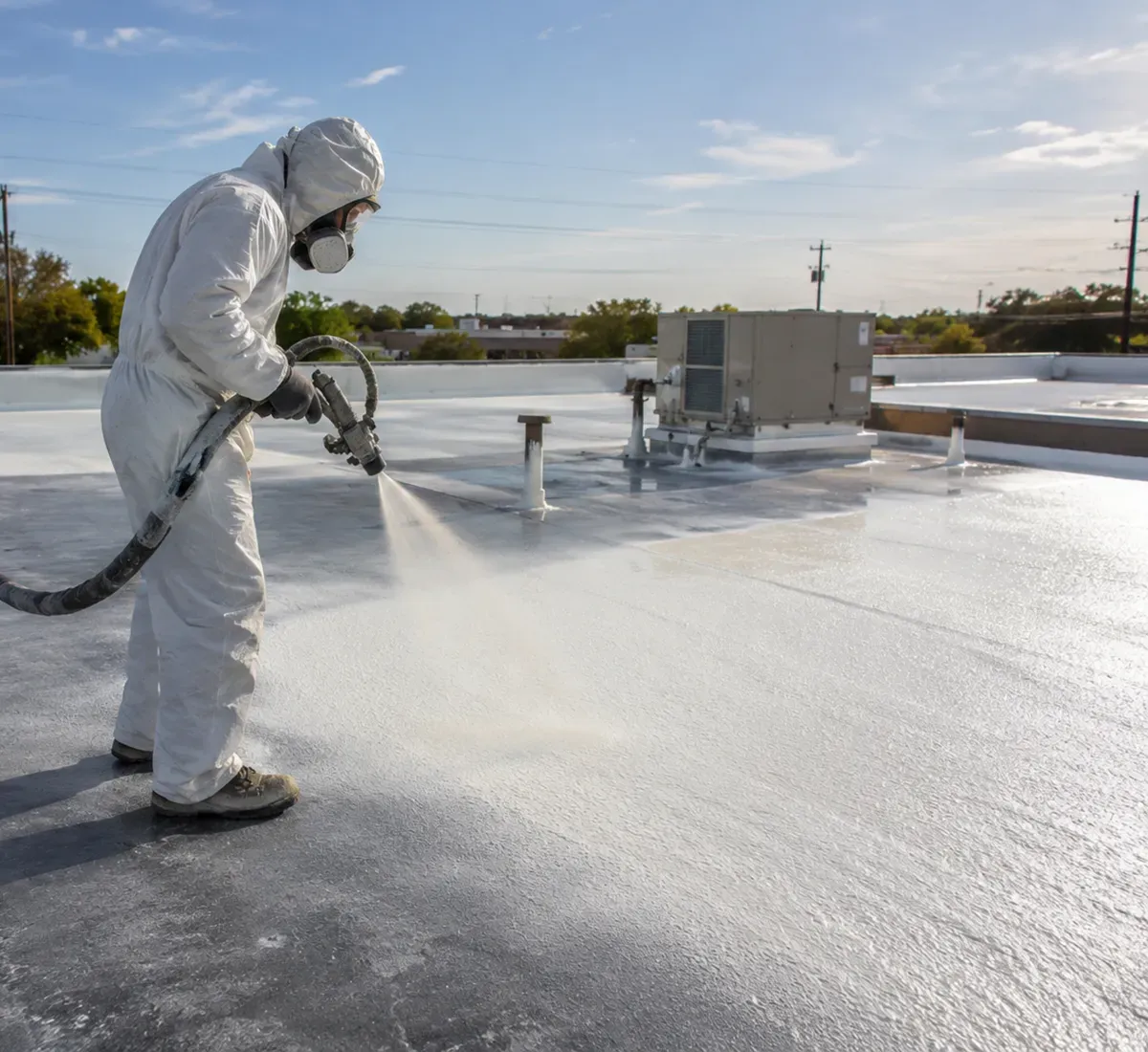
Project gallery
Spray Foam Roofing Projects in Victoria, TX
This roofing system may be considered for different types of properties in Victoria, TX, including certain homes, warehouses, workshops, and commercial buildings. Flat and low-slope roofs may be candidates when the existing substrate is suitable and drainage conditions can be properly addressed. Each structure requires an individual assessment because roof materials, penetrations, equipment, and exposure to weather can affect the installation plan. Some existing built-up roofing assemblies or tar and gravel roofs may be candidates, but their condition and compatibility must be confirmed before work begins.
A continuous foam layer can reduce seams and gaps across compatible roof surfaces, while the protective coating helps shield the material from sunlight and weather exposure. The assembly must be designed around the roof's condition, slope, drainage requirements, and intended use. The pros of spray foam roofing can include added insulation, reduced air leakage, and a continuous surface with fewer seams. However, the cons of spray foam roofing may include higher initial costs, the need for periodic coating maintenance, and the importance of repairing substrate problems before installation. Rather than assuming every roof is suitable, a qualified roofing professional should determine whether restoration or another roofing solution is more appropriate for the property.
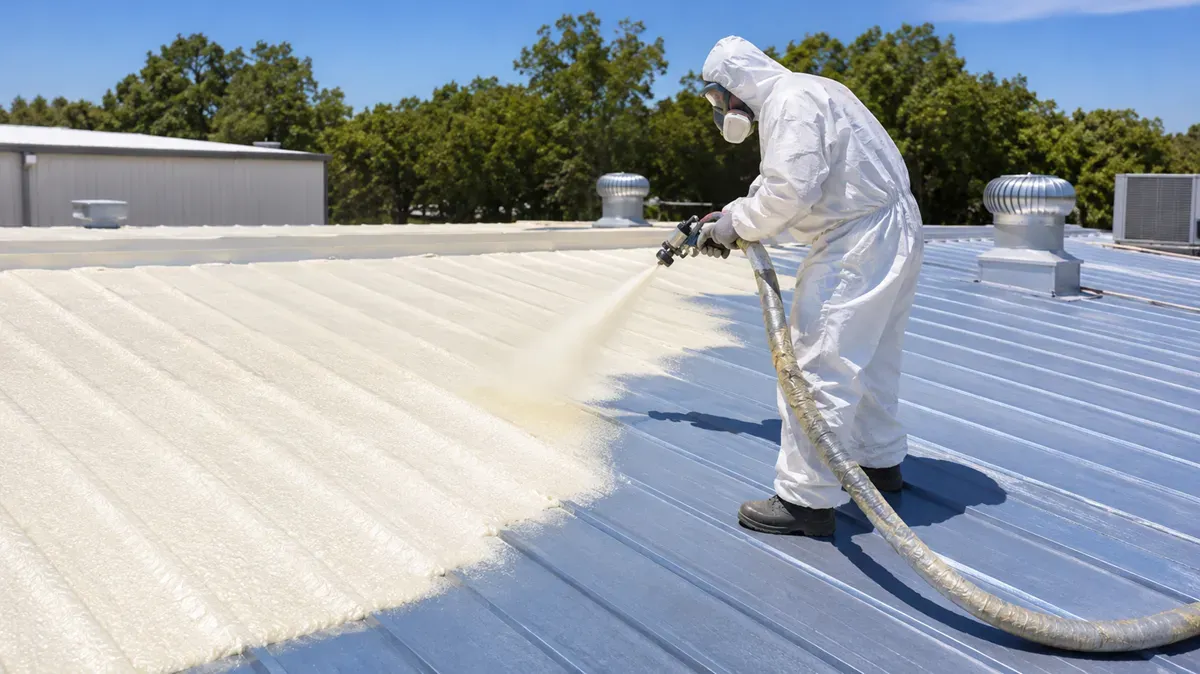
Project / 01
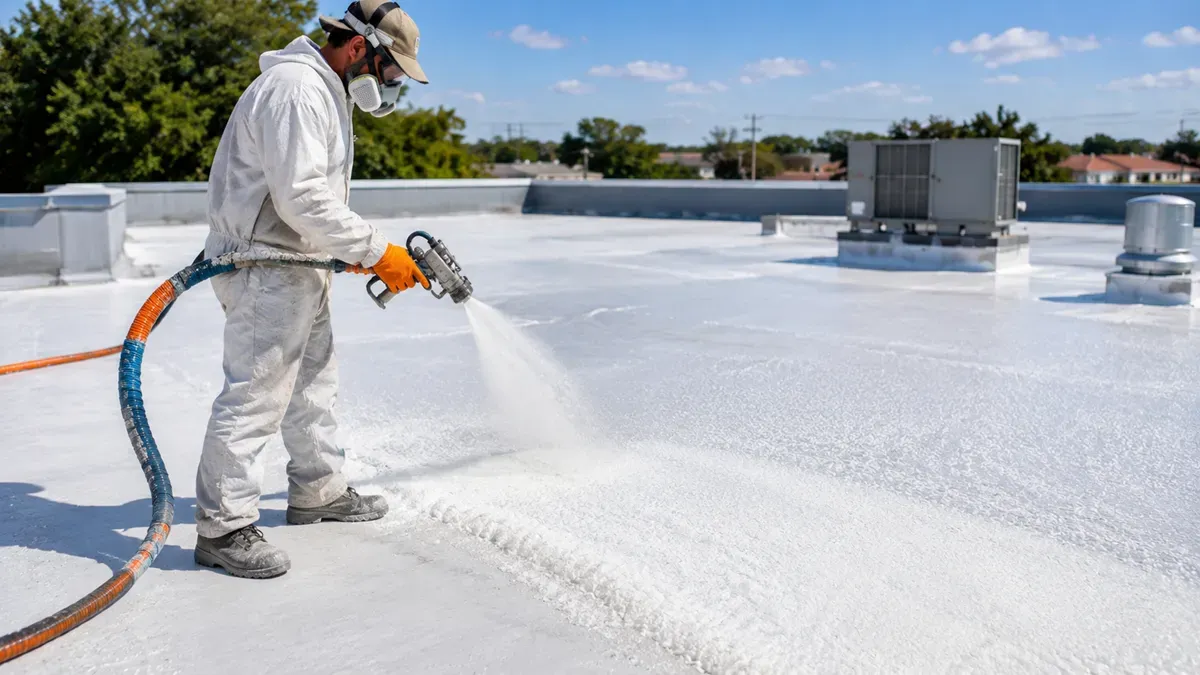
Project / 02
Project / 03
Answers for property owners
Spray Foam Roofing Questions from Victoria Property Owners
How Much Does Spray Foam Roofing Cost?
The cost depends on roof size, surface condition, foam thickness, coating specifications, and access to the work area. Estimates are often calculated per square foot, but repairs, drainage improvements, or removal of unsuitable roofing materials can also affect the total. A professional roof inspection helps identify the required preparation and installation work. Before comparing proposals, check that each one clearly lists the foam application, protective coating, repairs, and other included services.
What Are the Benefits of Spray Foam Roofing?
The system creates a continuous insulation layer that can reduce air leakage and limit unwanted heat transfer through suitable roof assemblies. When properly installed and protected with a compatible coating, it can also help reduce pathways for water intrusion. These are some of the pros of spray foam roofing, although performance depends on the foam product, application thickness, surface preparation, and coating condition. It does not replace necessary roof repairs or drainage improvements.
Can Spray Foam Roofing Be Applied Over an Existing Roof?
Yes, certain existing roofs may be suitable for this application, provided the substrate is structurally sound, dry, and compatible with the selected products. A professional inspection should identify active leaks, trapped moisture, damaged materials, and drainage concerns before work begins. Any unsuitable areas may require repair or removal. Repairing a spray foam roof or applying new material over existing foam also requires checking adhesion, coating condition, and compatibility before additional work is performed.
How Long Does a Spray Foam Roofing System Last?
The service life depends on installation quality, foam specifications, protective coating condition, weather exposure, and maintenance. With proper installation and routine maintenance, spray foam roofs can last for many years, but no fixed lifespan applies to every property. The coating is especially important because it protects the foam from UV rays and weathering. Periodic inspections can identify coating deterioration, physical damage, or drainage issues. Recoating schedules and warranty coverage vary by product, so property owners should follow the manufacturer's maintenance recommendations.
Is Spray Foam Roofing Suitable for Victoria, TX's Climate?
This system may be suitable for certain properties in Victoria, where heat, humidity, and seasonal heavy rainfall place demands on roof assemblies. The foam can improve insulation and help limit air leakage, while an elastomeric or silicone coating protects it from sun and weather exposure. Proper drainage and surface preparation are essential, particularly where water may collect. A roof assessment helps determine whether the existing structure is a suitable candidate and whether the proposed coating system fits the local conditions.
Victoria Spray Foam Pros
Request a Spray Foam Roofing Estimate in Victoria, TX
Property owners considering this roofing option in Victoria, TX can begin with an evaluation of the existing roof and its compatibility with the proposed system. A professional assessment should consider roof condition, drainage, existing materials, moisture concerns, and the building's insulation needs. This information helps clarify the recommended preparation, foam application, and protective coating requirements. It also helps identify potential drawbacks, including the maintenance needs and limitations that are part of the pros and cons of spray foam roofing.
The system may be suitable for certain flat and low-slope roofs where a continuous insulated layer and protective coating can be installed according to product specifications. The final recommendation should be based on the roof's actual condition rather than an assumption that it works for every property. A complete proposal should explain the SPF system, coating materials, application scope, and routine maintenance expectations.
Contact Victoria Spray Foam Pros to discuss your roofing project and request an estimate. A local service professional can review the property's requirements, explain the available installation options, and help determine the next steps for your roof.
Victoria Spray Foam Pros also provides spray foam insulation services to property owners in nearby communities, including
Beeville,
El Campo,
Port Lavaca,
and surrounding areas.